

 Updated October 2026
 In short
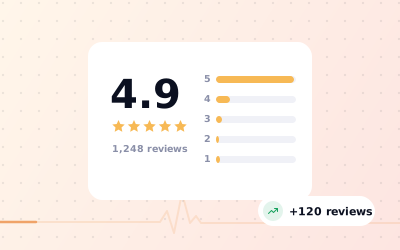
- Your Google rating is essentially the average of all your star ratings, shown to one decimal place.
- The more reviews you have, the more new ones it takes to move your average, up or down.
- A legitimate 5 star review generator creates a review link or QR code; anything that writes reviews for you produces fakes.
- Buying 5 star or 1 star reviews breaks Google's rules and, in the UK and US, the law.
How your 5 star rating on Google is calculated
Start with the correct Google Account and a clear view of which business or location is involved. Platform interfaces can change, so use Google’s current Help instructions for sensitive account, policy or verification decisions.
Because it is an average, the maths is straightforward. Add up all the stars, divide by the number of reviews and you have your rating. That also means you can work out how many new reviews it would take to reach a target.
| Starting point | Total stars | Target | New 5-star reviews needed |
|---|---|---|---|
| 3.8 from 20 reviews | 76 | 4.0 | 4 |
| 3.8 from 20 reviews | 76 | 4.5 | 28 |
| 4.2 from 50 reviews | 210 | 4.5 | 30 |
| 4.2 from 50 reviews | 210 | 4.7 | 84 |
| 4.6 from 120 reviews | 552 | 4.8 | 120 |
To run your own numbers, use this formula: new 5-star reviews needed = (target × current number of reviews − current total stars) ÷ (5 − target). It assumes every new review is a five, which never quite happens in real life, so treat the answer as a minimum rather than a plan.
What moves your average: 5 star reviews, 1 star reviews and volume
Three things change your rating: new reviews, edited reviews and removed reviews. How much any one of them matters depends on how many reviews you already have.
| Before | Exact average after one 1-star review | Shown on Google |
|---|---|---|
| 5.0 from 10 reviews | 4.64 | 4.6 |
| 4.8 from 50 reviews | 4.73 | 4.7 |
| 4.8 from 200 reviews | 4.78 | 4.8 |
- Volume protects you. With a handful of reviews, one bad rating changes your average noticeably. With hundreds, it barely moves it.
- Recency changes perception, not the maths. Old and new reviews count equally in the average, but many readers look at the newest reviews first.
- Edits count. If a customer updates their review after you sort out a problem, the new rating replaces the old one.
- Removals count. Reviews that Google removes for policy reasons no longer affect your rating.
Your average isn't everything. Google says local results are based mainly on relevance, distance and prominence, and reviews are one part of prominence alongside the rest of your profile. Customers also read the words as well as the stars, so a 4.7 backed by detailed, recent reviews and thoughtful replies can be more convincing than a perfect score from a few vague ones.
How to get 5 star Google reviews, ethically
Fix what customers complain about
Read your 3-star and lower reviews and list the themes that repeat: waiting times, prices, cleanliness, communication. Fixing one recurring problem does more for your rating than any request campaign.
Ask every customer
Ask everyone for an honest review, not just the people you think are happy. Many customers who have a good experience simply don't think to review unless someone asks.
Ask at the right moment
Ask when the benefit is fresh: as the meal ends, when the haircut is done, when the job is signed off. Our guide on how to ask for Google reviews has scripts for each channel.
Remove the friction
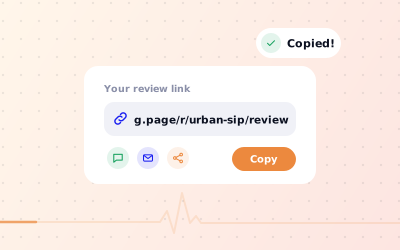
Send customers straight to the review form with a direct Google review link or a Google review QR code, rather than to your general Maps listing.
coordinate responses to customer feedback
Thank people for good reviews and answer complaints calmly. Your replies show future customers how you treat people, especially when something goes wrong.
Keep it steady
Build the ask into your daily routine so reviews arrive every week, rather than in one burst that then stops.
None of this involves asking for five stars. Google doesn't allow you to request a particular rating, and you don't need to: customers who had a great experience usually give five stars without being told. Google reviews 5 star ratings are the result of good service plus a convenient ask, not clever wording.
What is a 5 star Google review generator?
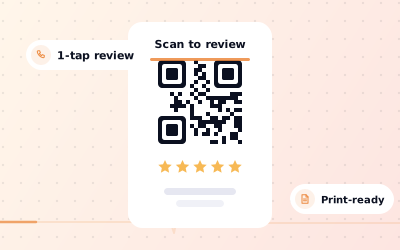
People who search for a “5 star Google review generator” are looking for very different things. The legitimate kind is a tool that generates a review link or QR code for your business, so customers can open your Google review form with one tap or scan. That is useful and fully allowed, and you can create both yourself: see our guides to the Google review QR code and the Google review link.
The other kind generates the reviews themselves: tools or services that write review text, post reviews from fake accounts or produce batches of five-star ratings. Those are fake reviews, whatever the tool calls itself. Google's policies prohibit them, and in the UK and the US they are now against the law.
Why you shouldn't buy 5 star or 1 star Google reviews
Sites selling “buy Google 5 star reviews” packages promise a quick rating boost, and some also offer to post 1-star reviews on competitors. Both are fake reviews. Here is why they are a bad bet:
- They break Google's policies. Fake engagement, paid reviews and reviews from people with a conflict of interest are all prohibited, whether they are positive or negative.
- Google looks for them. Google uses automated systems and human reviewers to detect fake reviews. It removes them and can restrict or suspend profiles that benefit from them, and in some countries, including the UK, it can show a public warning on the profile.
- They are illegal in the UK and US. The UK's Digital Markets, Competition and Consumers Act 2024 made buying or hosting fake reviews unlawful from April 2025, and the US FTC rule banning fake reviews took effect in October 2024.
- Buying 1 star reviews for a competitor adds risk. As well as breaking Google's rules and fake review laws, false negative reviews about a named business can expose you to legal action from that business.
- They don't bring customers. Fake praise sets expectations your real service then has to meet, and readers are good at spotting generic, unrealistic reviews.
How to handle a 1 star Google review
A 1 star Google review stings, especially when your rating has been high. Handle it in this order:
Pause before replying
Read it twice and wait until you can reply calmly. A defensive reply does more harm than the review itself.
Check what happened
Look for the visit, order or booking and talk to the staff involved. Decide whether the complaint is fair, partly fair or not about you at all.
Reply publicly
Thank them, apologise for their experience, say what you are doing about it and give a way to contact you. Our guide on how to respond to Google reviews has templates.
Resolve it privately
If they get in touch, fix the problem. Some customers update their review afterwards; that is their choice, so never ask for it in exchange for anything.
Report it only if it breaks the rules
Fake reviews, conflicts of interest, harassment and off-topic content can be reported. A genuine bad experience can't be removed. See how to remove negative Google reviews.
Learn from it
If the same problem appears in several reviews, that is your next thing to fix.
A 1-star review with a calm, helpful reply can reassure readers that you deal with problems properly, and a steady flow of new, genuine reviews limits how much any single rating moves your average. For more on this, read our guide to handling negative Google reviews.
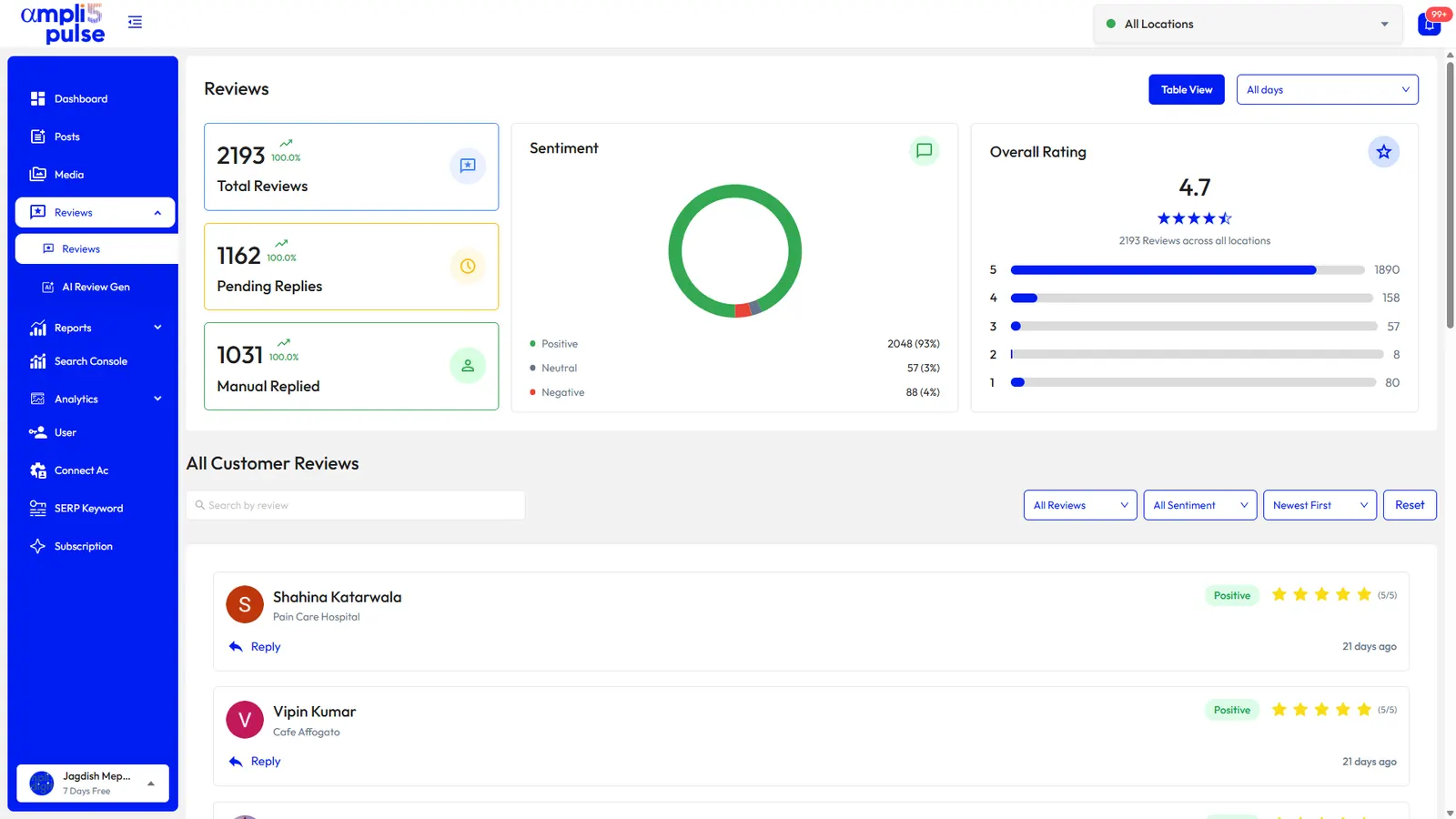
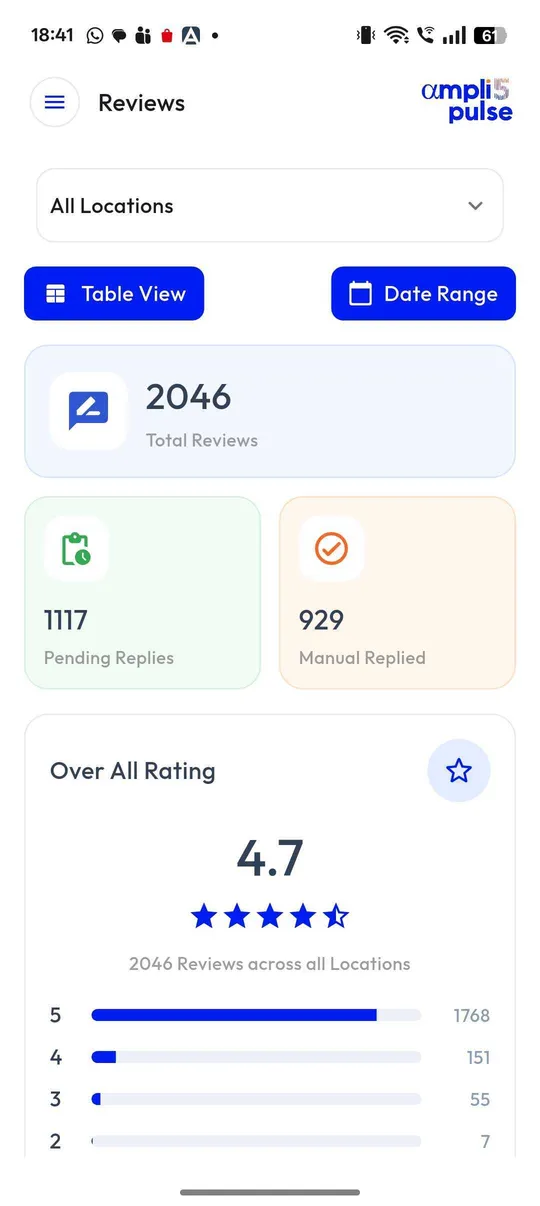
Track your 5 star reviews on Google across every location
If you run several branches, a healthy overall picture can hide one location that is slipping. Watching ratings and review counts side by side shows you where to act first.
Sources: Google Business Profile Help: Understand review scores for local places & businesses; Google Maps content policy: Prohibited & restricted content; Google Business Profile Help: Create a Google link or QR code to request reviews.